Athina Lasithiotaki

Worked with

10 institutions

Practice

Art history, archaeology, anthropology

I research materiality, archival activation and Balkan cultural narratives, and how objects, archives and vernacular histories build collective memory in contemporary art.

18Exhibitions and research projects since 2022
48Artists brought together for Elaionas ’23
4Cities: Athens, Patmos, Milan, Venice
4Exhibition publications

Exhibitions

13 projects, 2022–2026

Method

Drawn from her curatorial texts
  1. 01

    Start from the site and its material

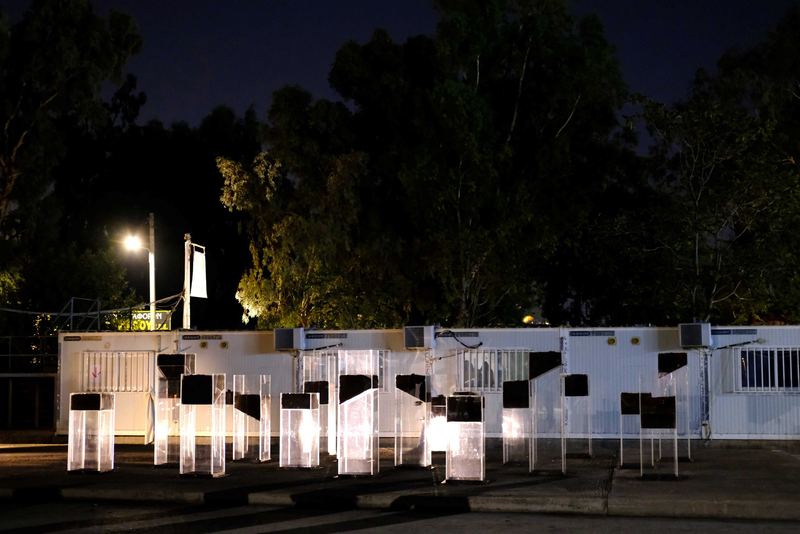
    Site visits and close observation treat the place as a living, layered environment shaped by history and human intervention.

    From Elaionas ’23
  2. 02

    Work alongside the artists

    Sustained dialogue with each artist, in the studio as much as in the gallery, so the framework grows out of their practice.

    From Time as Memory as Story
  3. 03

    Write the texts

    Original texts answer the curatorial framework and add their own readings, so many voices can share one field.

    From Elaionas ’23
  4. 04

    Design the route through the space

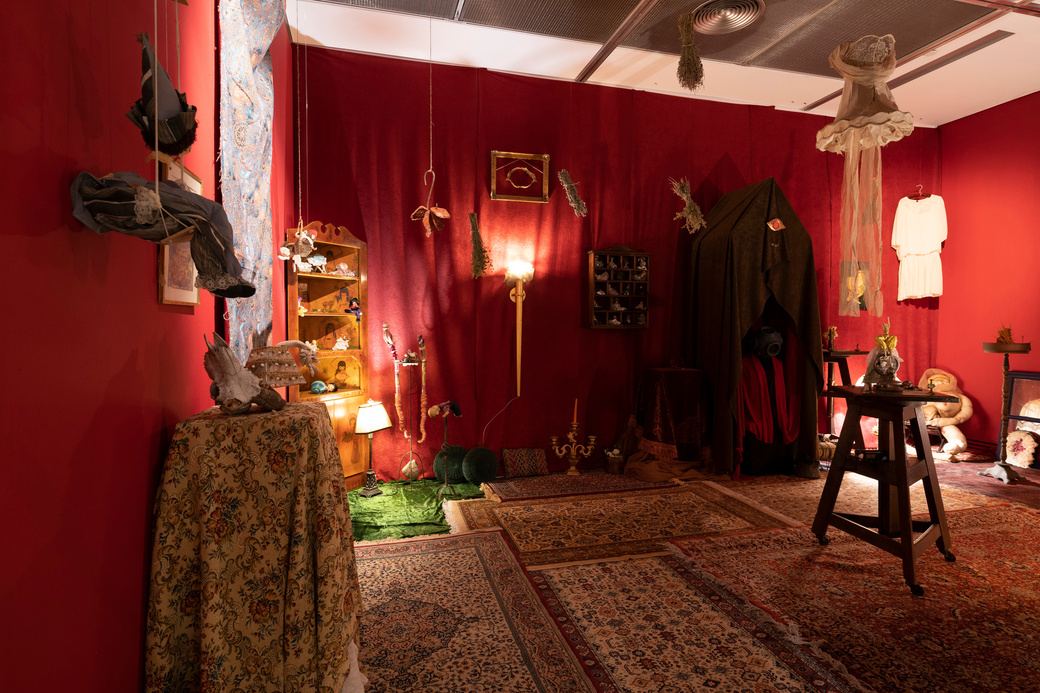
    The installation moves the body between states, fluid to grounded and image to object, so the visit itself becomes a form of attunement.

    From the Aegean Film Festival
  5. 05

    Keep the process visible

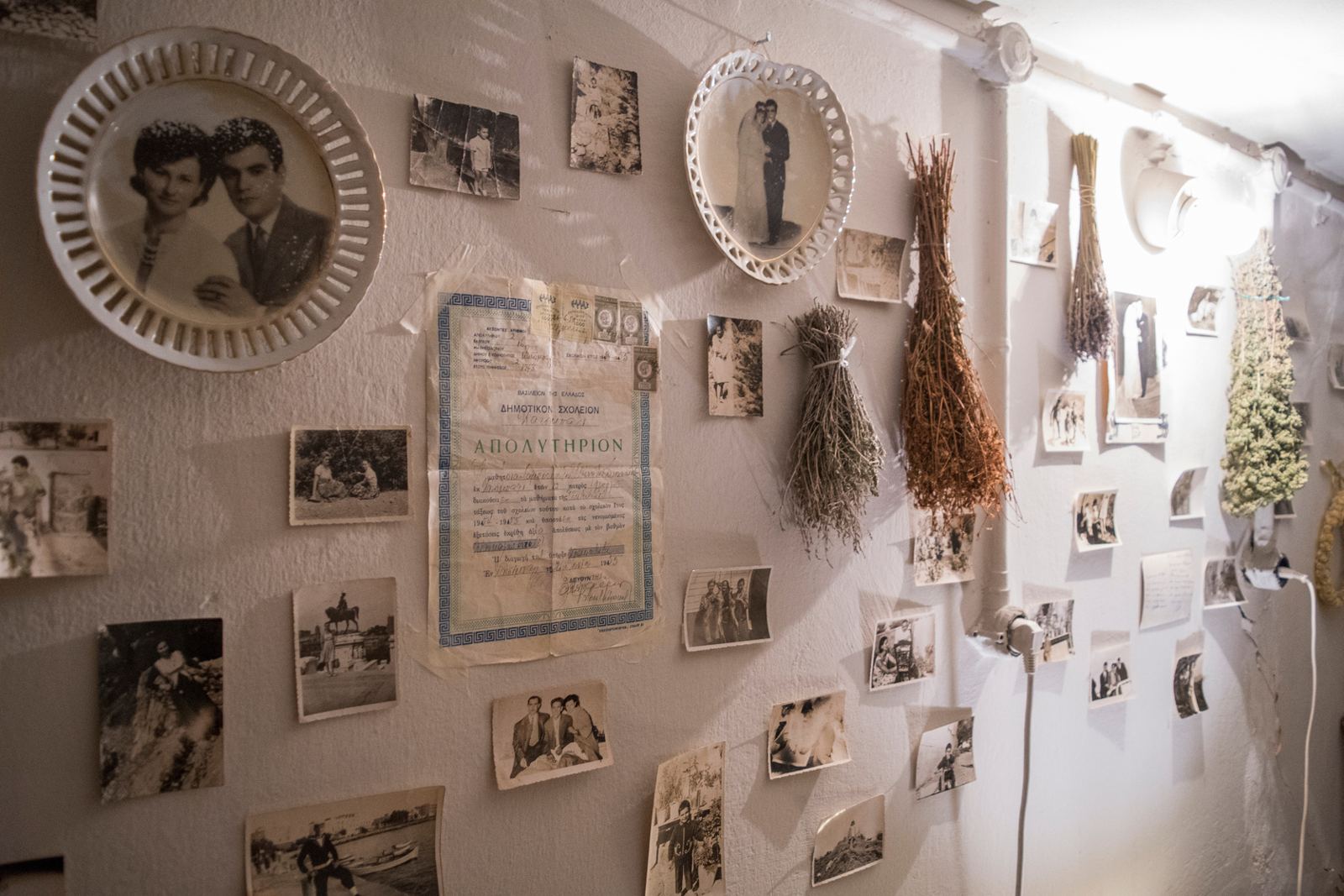
    Sketches, drafts, failed experiments and conversations stay as a living archive, so each work carries the history of its making.

    From Time as Memory as Story

Research

Venice, Athens
Presenting Time as Memory as Story, Circular Cultures Design School, Athens, 2026

05.2026, curatorial proposal

Time as Memory as Story

Circular Cultures Design School 2026, Onassis ONX with the British Council, Athens

How can we curate an exhibition that unfolds in space rather than in time?

In the context of CCDS 2026, I presented a project centered on the following question: How can we curate an exhibition that unfolds in space rather than in time? As I began exploring this question through conversations with peers and ongoing research, it became clear that the inquiry reached far beyond exhibition design itself.

Read the proposalClose

Contemporary exhibition practices often privilege temporality; both in the ways visitors are expected to navigate exhibitions and in the ways exhibitions are constructed. Finished artworks, polished interpretive texts, and the omnipresent curatorial voice, present culture as something complete and resolved. Gradually, the question shifted toward a more fundamental concern: the moment of creation itself.

Even the most significant works in art history become fragments when detached from their context, making them difficult to understand or interpret. Contemporary artworks inherit a similar condition, but with an added complexity: their context is still unfolding. They cannot be fully understood without the social, cultural, and personal conditions from which they emerge, conditions that we ourselves continue to inhabit.

My project, Time as Memory as Story (working title), proposes an alternative framework for experiencing art and design by placing artistic processes, rather than artistic completion, at its center. Instead of presenting complex ideas solely through carefully orchestrated exhibitions, the project envisions a dual system grounded in participatory pedagogies and continuous documentation.

The first component is a living archive. Curators work alongside artists in their studios, documenting their practice through conversations, interviews, photographs, sketches, drafts, notes, and recordings. Equally important are the traces that are often excluded from exhibition-making: failed experiments, abandoned ideas, moments of uncertainty, and diary entries. Rather than treating these materials as secondary, the archive recognizes them as integral to the work itself. This growing body of material is made accessible through an online platform where visitors can navigate each artist's creative process as an evolving archive rather than a finished narrative.

The second component is the physical exhibition. Because the artworks have been accompanied by an ongoing record of their becoming, they carry with them a history that would otherwise remain invisible. The exhibition does not simply display completed objects; it presents the relationships, decisions, failures, and memories that shaped them. In this way, the exhibition unfolds spatially rather than temporally. Rather than asking visitors to follow a predetermined sequence, it invites them to construct their own paths through a network of stories, processes, and material traces, transforming the exhibition into a space where creation itself becomes the primary object of encounter.

Representation→Signification

10–11.2025, fellowship seminar

The Materiality of Meaning

Picasso’s collages and Man Ray’s Rayographs, Peggy Guggenheim Collection, Venice

My seminar, presented in the context of the Peggy Guggenheim Collection’s Fellowship, examines the shift from representation to signification in early 20th-century art through a comparative study of Pablo Picasso’s Synthetic Cubism and Man Ray’s Rayographs. It argues that this transformation is fundamentally grounded in a reconfiguration of materiality, where matter is no longer treated as a passive carrier of image but as an active, generative component in the production of meaning.

Read the abstractClose

Central to the analysis is a methodological approach that foregrounds materiality as both subject and tool of inquiry, positioning artistic processes — cutting, layering, assembling, and exposing — as epistemological acts through which meaning is constructed rather than simply represented.

The essay draws on semiotic theory (Ferdinand de Saussure and Charles S. Peirce) and critical readings by Rosalind Krauss, Walter Benjamin, Carol Armstrong, and others to situate both practices within a broader modernist rethinking of the sign. It demonstrates how Synthetic Cubism destabilizes illusionistic representation through collage, fragmentation, and the incorporation of everyday materials, while Rayographs bypass the camera altogether, producing images through direct material exposure, light, and chance. In both cases, meaning emerges not from mimetic correspondence but from relational difference, absence, and the agency of materials themselves.

Methodologically, the paper develops a material-led reading practice in which form, process, and substance are treated as inseparable. This approach allows for an understanding of artworks as systems of signification produced through material interaction, rather than as finished representations of external reality. By emphasizing automatism and procedural making, the essay highlights how both Picasso and Man Ray engage with systems in which control is partially relinquished to material behavior, reinforcing the instability of authorship and the productivity of chance.

Ultimately, the seminar argues that Synthetic Cubism and Rayographs participate in a shared modernist redefinition of artistic production, where materiality becomes the primary site of meaningmaking. Rather than opposing photography and painting, the analysis reveals their convergence within a common logic of signification, where absence, trace, and material process replace representation as the foundation of artistic meaning.

Index

18 projects
YearProjectInstitutionRoleCity
2026Memory Manual.sympanCuratorAthens
2026Time as Memory as StoryCircular Cultures Design School, Onassis ONX × British CouncilParticipantAthens
2025The Materiality of MeaningPeggy Guggenheim CollectionFellowVenice
2025Aegean Film Festival, Visual Arts ProgrammeAegean Film FestivalCuratorPatmos
2025Creativity for Social Change AwardArt for TomorrowCuratorMilan
2024Temporal Transferences: Jean Cocteau × Mylene JampanoiRoma GalleryProduction ManagerAthens
2024Art Athina 2024Roma GalleryBooth Curator & Sales ManagerAthens
2024ChromophobiaRoma GalleryCuratorAthens
2024And All Our World Is DewDeree (ACG)Assistant CuratorAthens
2023The Musicality of SculptureDeree (ACG)Assistant CuratorAthens
2023Elaionas 2023: Chthonic & the AnthropoceneElaionasAssistant Curator, Sponsorships & OperationsAthens
2023Art Athina 2023Roma GallerySales RepresentativeAthens
2023ἰῶμαιBack to AthensCuratorAthens
2023A Scattering of SaltsDeree (ACG)Assistant Curator & Gallery AttendantAthens
2023The Space BetweenDeree (ACG)CuratorAthens
2023ParousaDeree (ACG)CuratorAthens
2022FORTHCOMING IIISpace52Research AssistantAthens
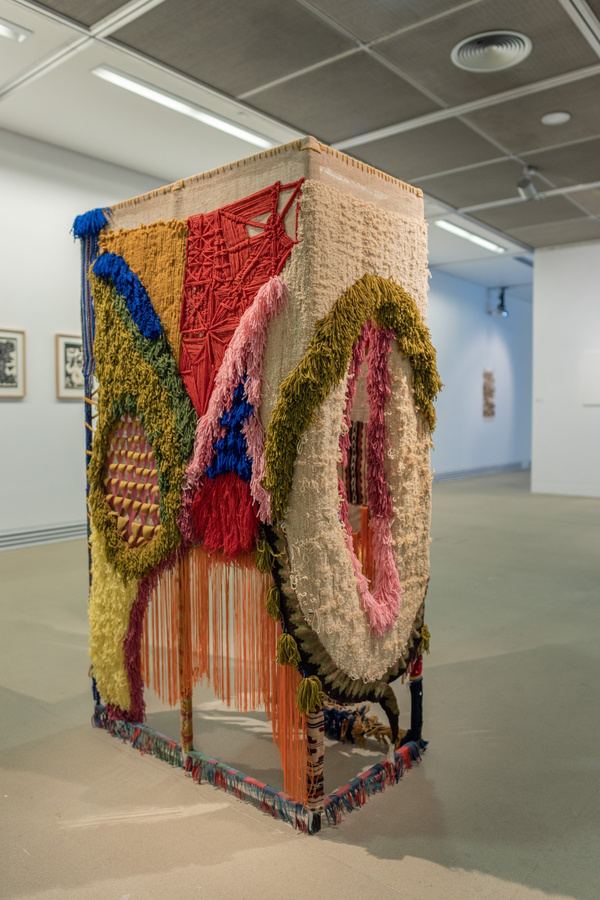
2022Weaving WorldsDeree (ACG)Assistant CuratorAthens

Notes

Publications

  • And All Our World Is Dew06.2025
  • A Scattering of Salts10.2024
  • Days of Art in Greece03.2024
  • Weaving Worlds09.2023

Awards

  • Deree Merit Scholarship2021–25
  • Frances Rich Fine & Performing Arts Scholarship2022–25
  • Outstanding Graduating Student Award, Art HistoryDeree
  • Outstanding Society Member AwardDeree

Education

  • BA, Art HistoryDeree, ACG

To confirm: degree titles and dates.